
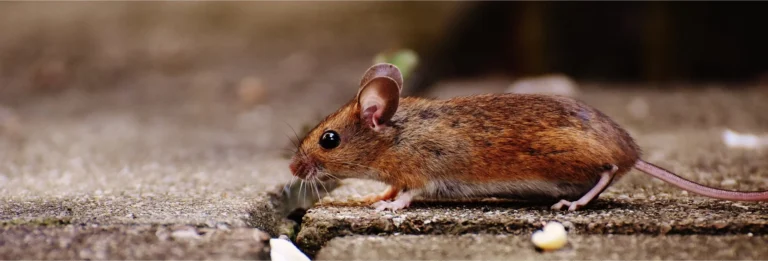
The first cold snap of October is all it takes. When nighttime temperatures drop into the 40s, the mice and roof rats that spent the summer in Holly Springs’ brush lines, greenways, and creek corridors start shopping for winter housing — and a heated house with a quiet attic is the best listing in the neighborhood. By the time most homeowners hear the scratching, the new tenants have been inside for weeks.
Here’s how they get in, how to spot them early, and what actually keeps them out.
The signs most people miss
Rodents are quiet, but they’re not invisible. The early evidence:
- Droppings — small dark pellets along baseboards, in the pantry, under sinks, and in the garage. Fresh ones are soft and dark; old ones are gray and crumbly.
- Scratching or scurrying in walls and ceilings, usually at night. Attic activity at dusk often means roof rats.
- Gnaw marks on food packaging, stored boxes, and the edges of door frames. Rodent teeth never stop growing, so they chew constantly.
- Grease rubs — dark smudges along the baseboards and pipes they travel nightly.
- A nest of shredded insulation or paper in a quiet corner of the attic, garage, or crawl space.
One mouse in October is a scouting party. A single female can produce a new litter every three weeks, so the gap between “we saw one” and “we have a problem” is measured in weeks, not seasons.
How they get in (it’s a smaller hole than you think)
A mouse can squeeze through a gap the width of a dime — about a quarter inch. A rat needs roughly a half inch. On a typical Holly Springs home, the usual doors are:
- Gaps where AC lines, plumbing, and cables enter the house
- Garage door corners that don’t seal flush
- Roofline and soffit gaps, especially on two-story homes near wooded lots
- Crawl-space vents with torn or missing screens
- Weep holes and unsealed brick joints at the foundation
On Apex’s and Fuquay’s growth edges, there’s a second driver: new construction. Clearing and grading pushes field mice and rats out of the brush, and the nearest finished home becomes the refuge. If your street still has active building within a block or two, your risk is higher this fall than it will be in three years.
What works — and what doesn’t
Sealing beats trapping. Traps and poison inside catch the rodents you have; they do nothing about the ones arriving next week. A proper rodent service starts with an inspection that maps every entry point, then seals them with rodent-proof materials — metal flashing, copper mesh, and sealants mice can’t chew through.
Bait stations protect the perimeter. Tamper-resistant exterior bait stations, checked and maintained on a schedule, intercept rodents outside before they ever test the house. This is the same equipment we install for quarterly customers, and it’s why our rodent control in Apex and Cary work is built around stations plus sealing, not traps alone.
Skip the ultrasonic plug-ins. There’s no solid evidence they repel rodents for more than a few days, and they do nothing about the entry points. Peppermint oil and mothballs are in the same category: pleasant-smelling ways to leave the door open.
When to call
If you’re seeing droppings in living spaces, hearing nightly wall activity, or finding new gnaw damage, the population is already established — that’s past DIY territory. Our first step is a free inspection: we identify the species, the entry points, and the nesting sites, then set traps and stations where they’ll work and seal the ways in.
Every quarterly plan is backed by our No-Hassle Callback Guarantee — if pests come back between visits, we come back and re-treat at no charge. Plans start at $49/month with no contract, and new customers get $60 off their first service.
Hearing something in the walls? Call (919) 446-3326 and we’ll find out what it is.